• Welcome to PaintingMania.com
  • Hello, New customer? Start here.
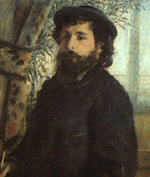
  • Claude Monet
    Nov 14, 1840 - Dec 5, 1926
  • Boats on the Beach at Pourville - Claude Monet was a French painter, initiator, leader, and unswerving advocate of the Impressionist style. He is regarded as the archetypal Impressionist in that his devotion to the ideals of the movement was unwavering throughout his long career, and it is fitting that one of his pictures - Impression: Sunrise (Musée Marmottan, Paris; 1872) - gave the group his name.
Shop by Art Gallery
Boats on the Beach at Pourville
  • Pin It
  • Share on Tumblr
  • Boats on the Beach at PourvilleEnlarge
  • Boats on the Beach at Pourville

  • Claude Monet
  • Standard size
    We offer original aspect ratio sizes
  • Price
  • Qty
  • 20 X 24 in
  • $95.95
  • 24 X 36 in
  • $155.95
  • 30 X 40 in
  • $208.95
  • 36 X 48 in
  • $298.95
  • 48 X 72 in
  • $583.95
  • If listed sizes are not in proportion to the original, don't worry, just choose which size is similar to what you want, we can offer oil paintings in a suitable size, painted in proportion to the original.
  • If you would like the standard size, please let us know. Need a Custom Size?
  • line
  • Boats on the Beach at Pourville, Low Tide, 1882
    Oil on canvas
    23 7/8 x 31 3/8 inches
    Kreeger Museum, United States.


    In 1882, Claude Monet spent time painting his native Normandy while staying in Pourville, a fishing village along the rocky coastline. Setting up on the beach, he created artworks en plein air, capturing the changing light and atmosphere. He painted with quick, defined brushstrokes of unmixed color for the land and wispier, blended marks in blues, turquoises, and pinks for the sky and sea, separated only by a misty horizon line. This work is one of two paintings in the Kreeger’s collection from this spot on Pourville’s beach—the other, Sunset at Pourville— overlooking the grass-covered limestone cliffs of Varengeville and Vasterival. In Monet’s framing, the landmass on the left rises up from the coast like a lumbering beast. The cliffside is depicted mostly in shadows, with dark blue brushstrokes woven around dabs of peach and yellow tones, indicating the limestone surfaces that are reflected in the water below. The beach is empty except for two small vessels nestled in the sand, emphasizing the solitary nature of this scene, where only the artist is witness to the changing tide.

    Why settle for a paper print when you can add sophistication to your rooms with a high quality 100% hand-painted oil painting on canvas at wholesale price? Order this beautiful oil painting today! that's a great way to impress friends, neighbors and clients alike.

  • 100% hand-painted oil painting on artist grade canvas. No printing or digital imaging techniques are used.
  • Additional 2 inch blank border around the edge.
  • No middle people, directly ship to the world.
  • In stock items ship immediately, usually ships in 3 to 10 days.
  • You can order any painting in any size as your requests.
  • $12.95 shipping charge for small size (e.g., size <= 20 x 24 in).
  • The cheapest shipping rate from DHL, UPS, USPS, etc.
  • Canvas stretched on wood bars for free.
    - Need special frame for oil painting? Please contact us.
  • Send you a digital copy via email for your approval before shipping.
  • 45-day Satisfaction Guaranteed and 100% Satisfaction Guaranteed.
Prev Boats on the Beach at Etretat 1883 Bonnieres, Quick Sketch Next
Would you like to publicly share your opinion of this painting?
Be the first to critique this painting.

Other paintings by Claude Monet:

Regatta at Argenteuil 1874
The Regatta at Argenteuil
Haystacks at Chailly at Sunrise
The Japanese Bridge 1
Claude MonetIn 1890 Monet had bought a strip of marshland across the road from his house and flower garden, through which flowed a tributary of the Epte. By diverting this stream, he began to construct a water-lily garden. Soon weeping willows, iris, and bamboo grew around a free-form pool, clusters of lily pads and blossoms floated on the quiet water, and a Japanese bridge closed the composition at one end. By 1900 this unique product of Monet's imagination (for his Impressionism had become more subjective) was in itself a major work of environmental art--an exotic lotus land within which he was to meditate and paint for more than 20 years. The first canvases of lilies, water, and the Japanese bridge were only about one yard square, but their unprecedented open composition, with the large blossoms and pads suspended as if in space, and the azure water in which clouds were reflected, implied an encompassing environment beyond the frame. This concept of embracing spatiality, new to the history of painting and only implicit in the first water-lily paintings, was expanded by 1925 into a cycle of huge murals to be installed in Paris in two 80-foot oval rooms in the Orangerie of the Tuileries. These were described in 1952 by the painter André Masson as "the Sistine Chapel of Impressionism." This crowning achievement of Monet's long, probing study of nature--his striving to render his impressions, as he said, "in the face of the most fugitive effects"--was not dedicated until after his death. The many large studies for the Orangerie murals, as well as other unprecedented and unique works painted in the water garden between 1916 and 1925, were almost unknown until the 1950s but are now distributed throughout the major private collections and museums of the world. Despite failing eyesight, Monet continued to paint almost until his death in 1926.